


What is investing?
Investing means using your money to buy assets that you expect will grow in value or generate income over time.
Instead of just saving in a bank (where returns are usually low), you put your money to work in financial markets so it has a chance to grow faster than inflation.
Key ideas:
- Higher potential returns usually come with higher risk.
- Time in the market (staying invested for years) matters more than timing the market.
- Starting small and staying consistent is more important than starting big.
Stocks: Owning a slice of a company
A stock (or share) represents partial ownership of a company.
If you buy one share of a company, you own a small piece of that business.
How you can earn from stocks:
- Capital gains: If the stock price goes up and you sell at a higher price.
- Dividends: Some companies share a portion of their profits with shareholders.
Pros:
- Higher long-term return potential compared to many other assets.
- You become a direct owner in businesses.
Cons:
- Prices can be very volatile in the short term.
- A single company’s stock can fall sharply or even become worthless.
Best for:
- Long-term goals (5–10+ years) like retirement, children’s education, or building wealth.
Bonds: Lending your money
A bond is basically an IOU.
When you buy a bond, you are lending money to a company, government, or other entity. In return, they promise to pay you interest and return your principal at maturity.
How you can earn from bonds:
- Interest payments (coupons): Regular payments you receive as an investor.
- Capital gains or losses: If you sell the bond before maturity at a different price.
Pros:
- Generally less volatile than stocks.
- Provide regular income.
Cons:
- Long-term returns are usually lower than stocks.
- Bond prices can fall when interest rates rise.
- There is some risk that the issuer might not pay back (credit risk).
Best for:
- Stabilizing a portfolio.
- Short- to medium-term goals or for more conservative investors.
Mutual funds: A basket of investments
A mutual fund pools money from many investors and invests it in a diversified portfolio of stocks, bonds, or both.
A professional fund manager decides what to buy and sell according to the fund’s objective.
Types:
- Equity mutual funds: Mostly stocks.
- Debt mutual funds: Mostly bonds and fixed-income instruments.
- Balanced/hybrid funds: Mix of stocks and bonds.
How you can earn:
- NAV (Net Asset Value) growth: As the value of the underlying investments rises.
- Dividends or interest: Passed through from the fund’s holdings (depending on type).
Pros:
- Diversification with a small amount of money.
- Professional management.
- Easy to buy and sell (usually at end-of-day price).
Cons:
- Management fees (expense ratio) reduce your returns.
- Performance depends on the manager’s skill and market conditions.
- You don’t control individual stock or bond selection.
Best for:
- Beginners who want diversification without picking individual stocks.
- People with limited time or interest in active management.
ETFs (Exchange-Traded Funds): Funds you can trade like stocks
An ETF is similar to a mutual fund (it holds a basket of assets), but it trades on a stock exchange like a regular stock.
Many ETFs track a specific index (like a broad market index, sector, or bond index).
How you can earn:
- Price appreciation: As the ETF’s underlying portfolio grows.
- Dividends: If the ETF holds dividend-paying stocks or interest-paying bonds.
Pros:
- Diversification in a single trade.
- Often lower fees than many actively managed mutual funds.
- Can be bought or sold throughout the trading day at market prices.
Cons:
- You need a brokerage account to buy/sell.
- Some ETFs are complex (leveraged or exotic products) and not suitable for beginners.
- You may pay brokerage commissions or spreads.
Best for:
- Beginners who want low-cost, diversified exposure to markets.
- Long-term investors building a simple, passive portfolio (for example, broad-market index ETFs).
How to choose between stocks, bonds, mutual funds, and ETFs
You don’t have to choose only one; most investors use a mix.
A simple way to think about it:
- If you want higher growth and can tolerate ups and downs: more stocks (direct or via equity funds/ETFs).
- If you want stability and income: more bonds or bond funds.
- If you want simplicity and diversification: mutual funds or broad-market ETFs.
A common beginner approach:
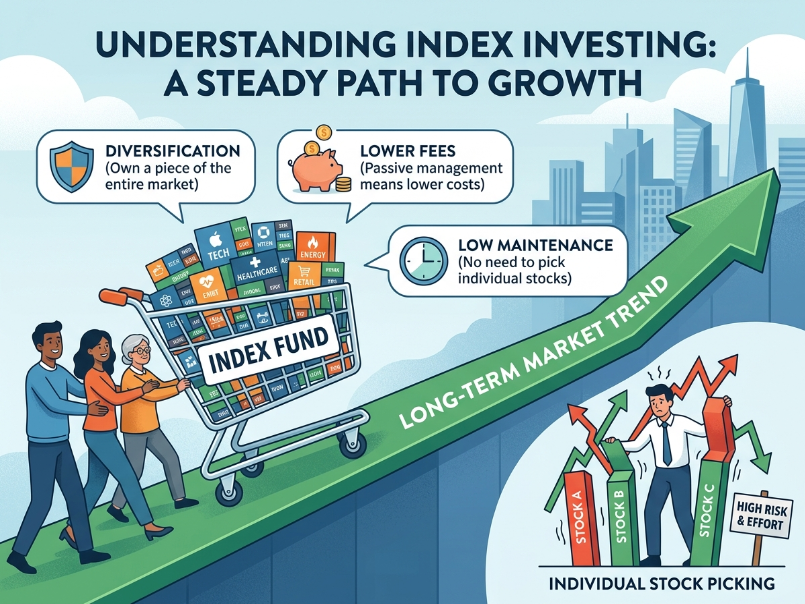
- Use 1–3 broad-based index funds or ETFs (for example, a large broad stock market fund, maybe a bond fund).
- Avoid overly complex or niche products at the start.
Getting started with small amounts
You don’t need a lot of money to begin investing.
Here’s a simple step-by-step path suitable for small amounts:
1. Clarify your goals and time horizon
Ask yourself:
- What am I investing for? (e.g., emergency buffer, future home, retirement)
- When will I likely need this money? (short term: <3 years, medium: 3–7 years, long: 7+ years)
- How much volatility can I emotionally tolerate?
General rule:
- Money needed in the next 1–3 years is usually safer in cash or conservative instruments, not in high-risk stocks.
2. Build a basic safety net first
Before investing aggressively:
- Set up a small emergency fund (even one month of expenses to start).
- Pay off high-interest debt (like credit cards) as much as possible — the interest rate you avoid is a guaranteed return.
3. Open the right accounts
You will typically need:
- A brokerage or investment account to buy stocks, ETFs, and mutual funds.
- In some countries, special tax-advantaged accounts for retirement or long-term goals (like IRAs, 401(k)s, or local equivalents).
Look for:
- Low or zero account minimums.
- Low fees and commissions.
- Good, simple user interface and educational resources.
4. Start with small, regular contributions
Instead of waiting to save a big lump sum:
- Set up a monthly contribution (for example, even a small fixed amount).
- Use dollar-cost averaging: investing a fixed amount at regular intervals, regardless of market ups and downs.
Benefits:
- Reduces the pressure of timing the market.
- Builds discipline and a habit of investing.
5. Choose simple, diversified investments
For beginners with small amounts, consider:
- One broad stock market index fund/ETF for growth.
- Optionally, one bond fund/ETF for stability.
- Avoid stock picking at the beginning if you are not ready to research companies.
Checklist for any fund:
- What does it invest in? (stocks, bonds, which region?)
- Is it actively or passively managed (index)?
- What is the expense ratio (annual fee percentage)?
- How volatile has it been in the past?
6. Stay patient and avoid emotional decisions
Markets will go up and down.
Key habits:
- Don’t panic-sell when markets fall; volatility is normal.
- Revisit your plan once or twice a year, not every day.
- Increase contributions as your income grows.
Common mistakes beginners should avoid
- Investing money they might need soon for rent, tuition, or emergencies.
- Chasing hot tips from social media without understanding the risk.
- Ignoring fees, which can quietly eat into returns over time.
- Putting everything into a single stock or highly speculative assets.
- Stopping investing after one bad experience instead of learning and adjusting.
A simple beginner example
Imagine you can invest a small amount each month:
- You decide your goal is long-term (10+ years).
- You open a low-fee investment account.
- You choose one low-cost, broad-market stock index fund or ETF.
- You invest a modest fixed amount every month, no matter what the news says.
- Once a year, you check your progress, adjust the amount if your income changes, and stay focused on the long game.
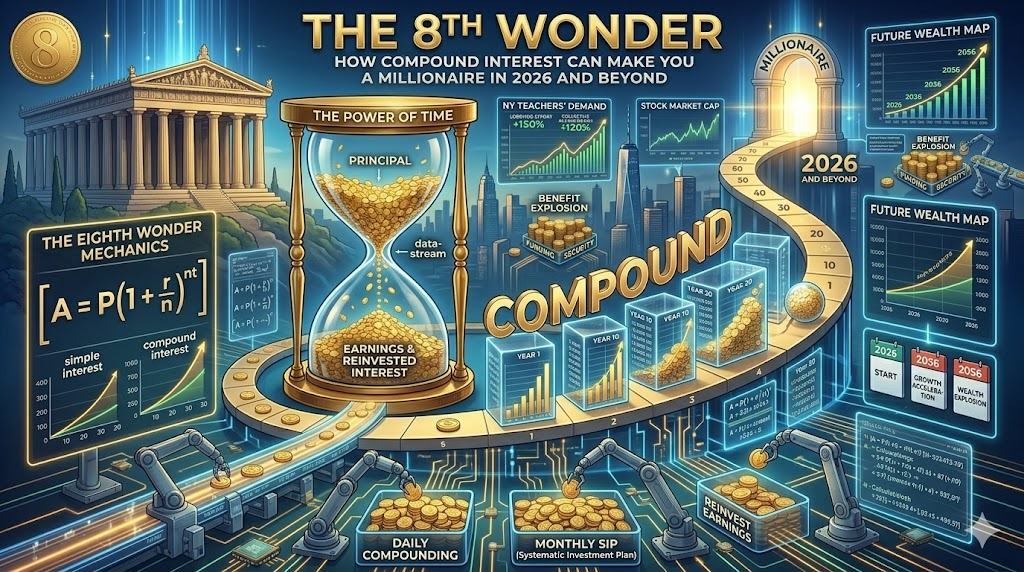
Over time, this consistent, simple approach can grow into a meaningful investment portfolio, even if you started with very small amounts.











Leave a Reply