


Investing & Behavioral Finance
“The premise of this book is that doing well with money has a little to do with how smart you are and a lot to do with how you behave.” — Morgan Housel, The Psychology of Money
In 1968, a man named Shelby Davis borrowed $50,000 from his wife and began investing in insurance company stocks. He had no formal finance training. He was 38 years old — an age at which most serious investment careers are already well underway. He had no edge in technology, no proprietary data, no Bloomberg terminal. He had only one thing: the ability to sit still and wait.
He held stocks for decades. He reinvested dividends. He did not panic when markets crashed. He did not get excited when they soared. He simply kept going.
When Shelby Davis died in 1994, his original $50,000 had become $900 million.
No algorithm. No MBA. No insider information. Just behavior, repeated with extraordinary consistency over an ordinary lifetime.
This is the thing about money that schools don’t teach, financial media doesn’t discuss, and the investment industry has every incentive to suppress: the biggest driver of financial outcomes is not intelligence — it is behavior. And behavior, unlike IQ, is something every single one of us can change.
Why We Get This Wrong
We are trained from childhood to believe that complex problems require complex solutions. Math problems have formulas. Diseases have treatments. Legal disputes have precedents. The difficulty is in knowing the right answer.
Money feels the same way. And the financial industry reinforces this. There are thousands of products, strategies, algorithms, and analysts — all suggesting that the path to wealth is finding the right formula, the right fund, the right timing.
But investing is not a problem of knowledge. It is a problem of behavior. The formula is not complicated. Buy diversified assets. Hold them for a long time. Don’t sell when it gets scary. Spend less than you earn. Start early.
Anyone who has read a single personal finance book knows this. And yet the majority of investors underperform the simple strategy because they cannot make themselves follow it when it matters most — which is precisely when following it is hardest.
Three stories illustrate this more clearly than any theory.
Story One: The Genius Who Panicked
James was a portfolio manager at a large investment bank in New York. He had a 4.0 GPA from Wharton, a CFA, and fifteen years of experience analyzing markets. He had studied every major crash in financial history. He knew, intellectually, that markets always recovered. He had the data memorized. He had presented it to clients.
In October 2008, at the peak of the financial crisis, James sold everything.
The S&P 500 was down 45% from its peak. Every morning brought new headlines about bank collapses, government bailouts, and the possible end of the global financial system. His phone rang constantly — clients panicking, colleagues second-guessing, his own 401(k) bleeding daily. The noise was unbearable.
He told himself it was a calculated decision. A tactical retreat to cash until the situation “clarified.” He would buy back in at the right moment.
He never found the right moment. The market bottomed on March 9, 2009 — six months after he sold — and then proceeded to begin the longest bull run in modern history. By 2012, the S&P 500 had fully recovered. By 2020, it had tripled from its crisis lows.
James eventually reinvested, but gradually, nervously, missing the sharpest part of the recovery. His theoretical knowledge of every historical crash and recovery was useless when the emotional pressure of living through one arrived in real time.
This is not a story about James being stupid. It is a story about James being human.
Story Two: The Janitor Who Quietly Got Rich
In 2014, a Vermont man named Ronald Read died at the age of 92. He left $8 million to his local library and hospital — a shock to everyone who knew him, because Ronald Read had spent most of his adult life working as a gas station attendant and part-time janitor.
He had no investment training. He never earned more than a modest wage. But starting in his 30s, he began buying shares in companies he understood — utilities, consumer goods, railroads — and he simply never sold them. He drove a secondhand car until it fell apart. He fixed his own clothes with safety pins. He lived in a small house he had owned for decades.
When he died, his portfolio contained shares in over 95 companies, some of which he had held for more than 50 years. Johnson & Johnson, Procter & Gamble, JM Smucker. Boring, unglamorous companies. Bought and held, year after year, as the dividends reinvested and compounded and the world changed around them.
The financial world expressed surprise and admiration. Personal finance writers called him an inspiration. And he was — but not for the reason most people think.
Ronald Read was not a great stock picker. He was a great waiter. His superpower was not intelligence. It was patience — the willingness to do nothing, repeatedly, for fifty years, while the mathematics of compounding did the heavy lifting.
In a world obsessed with finding the next great trade, Ronald Read’s story is quietly subversive. He didn’t beat the market through brilliance. He beat most professionals through behavior.
Story Three: The Lottery Curse
In 2002, Jack Whittaker won $314 million in the Powerball lottery — the largest single-ticket jackpot in US history at the time. He was already wealthy before he won, running a successful construction company worth several million dollars. He was not naive about money. He had built wealth from scratch.
Within four years, he was broke. Not depleted — destroyed. He filed for bankruptcy. His granddaughter died of a drug overdose. His wife divorced him. He was robbed multiple times and sued repeatedly. He was arrested for drunk driving and later for assault.
“I wish I’d torn that ticket up,” he told reporters in 2007.
Jack Whittaker’s story is not unique. Studies consistently show that lottery winners are no more likely to be happy five years after winning than they were before. A significant portion file for bankruptcy within a decade. The money arrived faster than the behavior that sustains money could develop.
Sudden wealth is a psychological stress test, and it reveals the truth that gradual wealth conceals: it is not the money that matters. It is the relationship with money. The habits. The patience. The ability to say no. The capacity to delay gratification, to resist status displays, to keep life simple when complexity is readily available and socially rewarded.
Jack Whittaker had the money. He didn’t have the behavior. And without the behavior, the money was simply gone.
The Five Behaviors That Separate Wealthy People from Everyone Else
These three stories — the genius who panicked, the janitor who waited, the winner who lost — all point to the same underlying truth. Wealth is built and preserved through behavior, not brilliance. And the behaviors are learnable.
1. Patience as a Competitive Advantage
The most powerful force in investing is time. Not strategy — time. A mediocre portfolio held for forty years will almost always outperform a brilliant portfolio churned quarterly.
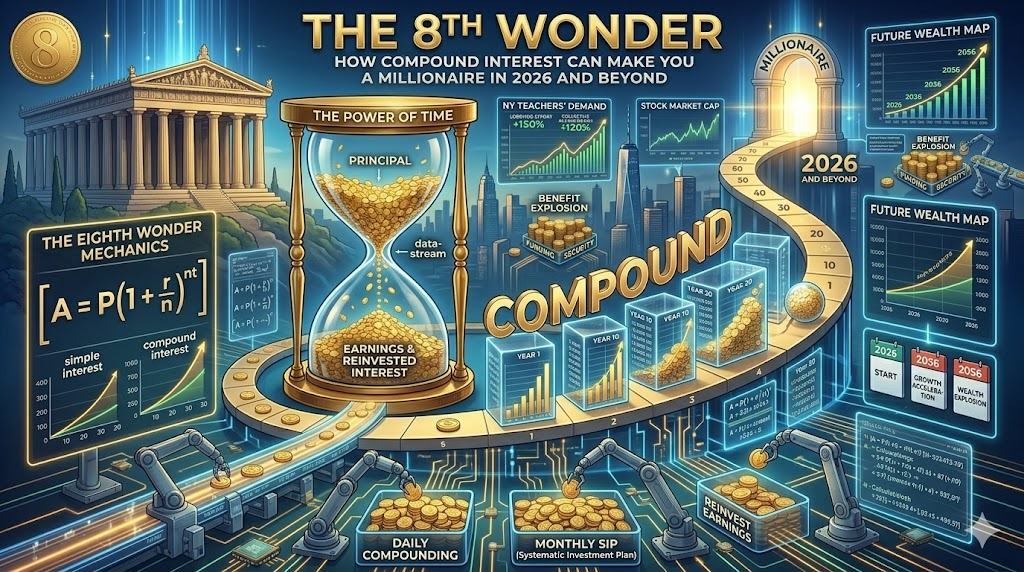
The reason compound interest works is that it requires time to express itself. The first decade of investing feels discouraging precisely because the mathematical magic hasn’t kicked in yet. The last decade feels miraculous for the same reason: most of the growth happens at the end, not the beginning.
Ronald Read understood this. Not through mathematics — but through temperament. He was willing to be bored. He was willing to look unimpressive for decades. And he was willing to wait.
Patience is hard because waiting feels like doing nothing. And we are conditioned to believe that doing nothing is the same as falling behind. In investing, the opposite is usually true. The investor who does the least frequently wins.
2. Humility About What You Don’t Know
Every financial crisis in history was preceded by a near-universal consensus that the good times would continue. The dot-com bubble. The housing bubble. The crypto mania of 2021. In each case, the people who got hurt most were those most certain about what the future held.
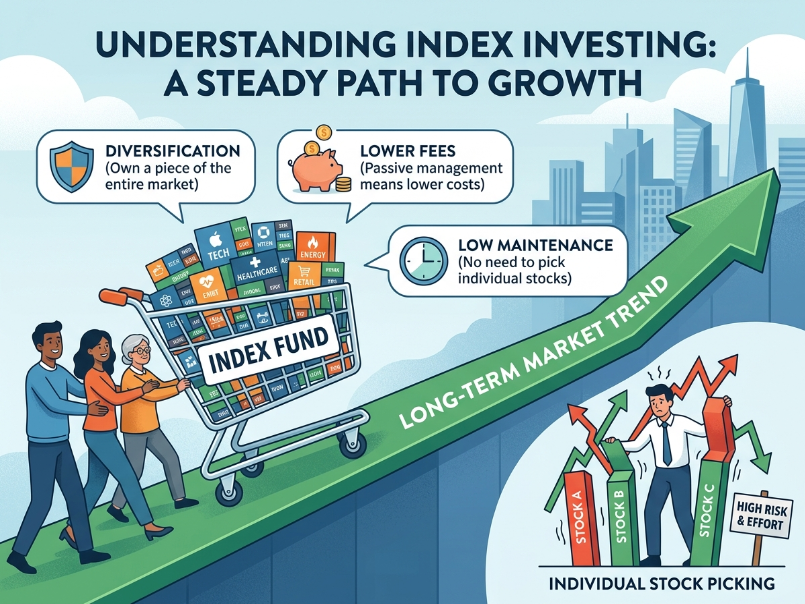
The investors who survived — and profited — were those humble enough to accept that they did not know what was coming, and structured their portfolios accordingly. Diversification is, at its core, an act of humility. It is an acknowledgment that you don’t know which asset class, which country, or which sector will lead the next decade.
The financial industry sells certainty. The market rewards humility.
3. The Ability to Ignore Noise
Every day the financial media generates an enormous volume of urgent, confident commentary about what the market will do next. Every quarter, analysts make predictions. Every year, magazines publish lists of the best stocks to buy.
Almost none of it is useful. Studies consistently show that financial media predictions have roughly the accuracy of a coin flip over time. And yet the noise is seductive, because it feels like information — like something you should act on.
The great behavioral advantage available to ordinary investors — the one that even most professionals don’t use — is the ability to simply not listen. To set an allocation, automate contributions, and stop checking. To treat a market correction as irrelevant because the time horizon is twenty years, not two months.
This sounds passive. It is, in fact, one of the most actively disciplined things an investor can do.
4. Emotional Separation from Portfolio Value
Your net worth is not your self-worth. This sounds obvious and is almost universally violated.
When portfolios rise, investors feel smart, validated, and confident — and often take on more risk than they should. When portfolios fall, they feel stupid, anxious, and panicked — and often sell at exactly the wrong moment.
The investor who can genuinely treat a 40% drop as “stocks on sale” rather than “evidence that I have made terrible decisions” has an enormous behavioral advantage. Not because they are emotionally numb, but because they have internalized the long-run truth: market declines are temporary, ownership of quality businesses is permanent, and the price today is not the price forever.
This emotional separation is a skill. It is developed through education, through experience, through building a portfolio that matches your true risk tolerance rather than the one you imagine you have during a bull market.
5. Compounding Your Best Habits
The same mathematics that makes money grow makes behavior grow. The investor who saves consistently for five years finds it easier to save in year six. The investor who doesn’t panic-sell through one crash finds it easier to hold through the next. Good financial behavior, repeated over time, compounds just like interest.
This is why starting matters more than amount. A person who begins saving $50 a month at 22 is not just building a portfolio. They are building the habit architecture that will carry them through their entire financial life. The amount is almost beside the point. The habit is everything.
The One Behavioral Shift That Outperforms Everything Else
If you could make only one behavioral change to your financial life, it would be this: automate your savings before you can see or touch the money.
Not because it’s the most glamorous advice. Because it removes behavior from the equation entirely.
James — our genius who panic-sold in 2008 — had the knowledge and lacked the behavior. But if his 401(k) contributions had been automatically deducted from his paycheck before he ever saw them, and invested automatically in a target-date index fund with no ability to change the allocation mid-panic, his behavior would have been irrelevant. The system would have held for him.
Ronald Read’s equivalent was simpler: he never had a brokerage account that made it easy to sell. He held physical certificates in some cases. The friction of selling was high. His behavior was, in part, structurally enforced.
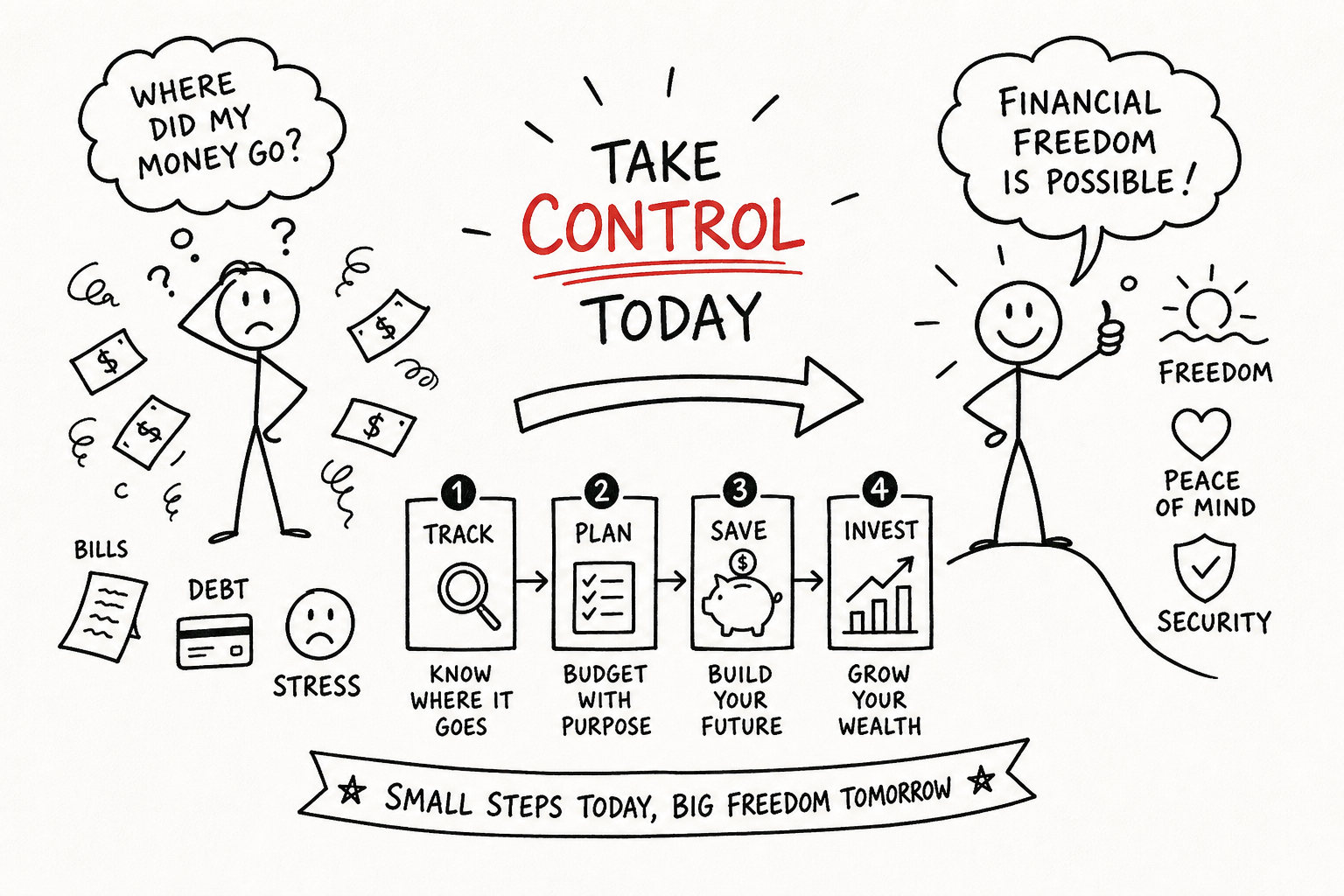
The practical implication: design your financial system so that the right behavior is the default and the wrong behavior requires effort. Automate contributions. Choose target-date funds that don’t require active management. Make selling difficult by establishing an investment policy statement that requires you to write down your reasons and wait 48 hours before acting.
You are not smarter than your emotions. Neither is James, with his CFA and his Wharton degree. Design a system that doesn’t ask either of you to be.
What This Means for You, Today
You do not need to be Ronald Read — patient to the point of asceticism, content to look unimpressive for fifty years. But his story, and James’s, and Jack Whittaker’s, all point to the same uncomfortable and liberating truth:
The gap between what you know about money and how you behave with money is the most important financial gap in your life. And unlike income, or market returns, or economic conditions — it is entirely within your control.
You cannot control what the market does next year. You cannot control interest rates, inflation, or whether your employer goes bankrupt. But you can control whether you panic-sell in a crash. You can control how much of each paycheck you keep. You can control whether you upgrade your car every three years or drive the old one into the ground. You can control whether you read financial news obsessively or trust a simple plan and stop looking.
These are not small controls. They are the controls that matter most.
The brilliant investor who panics at the wrong moment underperforms the ordinary investor who simply stays put. Every time. And staying put is available to everyone — regardless of IQ, income, or education — starting right now.
One Thing to Do This Week
Take fifteen minutes and answer this question honestly: In the last major market decline I experienced, what did I do?
If you stayed the course — did nothing, kept contributing, maybe even bought more — you already have the most important financial behavior. Protect it. Build systems around it. Don’t let the next cycle of market noise erode it.
If you sold, reduced contributions, moved to cash, or spent weeks anxious about your portfolio — that’s not a character flaw. It’s information. It tells you that your current portfolio is riskier than your emotional tolerance, and that you need either a simpler strategy, a lower allocation to stocks, or both.
James knew all the right answers. Ronald Read never studied the question. The difference wasn’t knowledge. It was character — and character, unlike the market, is something you can actually work on.
Disclaimer: This article is for educational and informational purposes only. The individuals described include both historical figures (Ronald Read) and composite/illustrative examples. This is not personalized investment advice. Consult a qualified financial professional before making investment decisions.
Related reading:
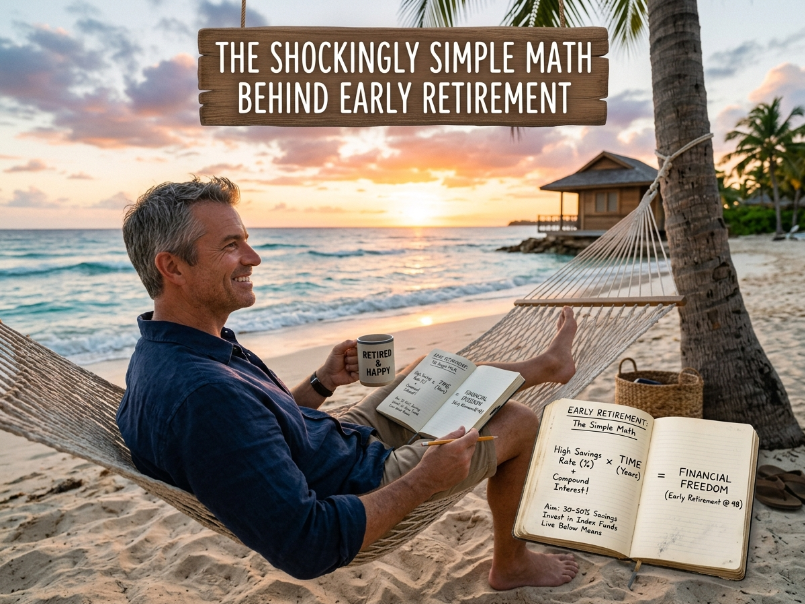
- The Shockingly Simple Math Behind Early Retirement
- Mr. Market Is Manic-Depressive — And That’s Your Biggest Advantage
- Write Your Investment Policy Statement Before the Next Crash







Leave a Reply