



Personal finance is one of the few life skills that affects nearly every part of your future. It impacts where you live, how you travel, how much stress you carry, and how much freedom you have later in life. Yet most people are never formally taught how money works.
Many adults enter the workforce without understanding budgeting, saving, investing, debt management, taxes, or retirement planning. As a result, they spend years learning through mistakes that could have been avoided.
The good news is that personal finance does not need to be complicated. You do not need a finance degree, a six-figure salary, or complicated spreadsheets to build financial stability. You only need a clear system, consistent habits, and patience.
This guide explains the foundations of personal finance in simple language. Whether you are just starting your career, trying to recover from financial mistakes, or looking to organize your money better, this article will help you build a stronger financial future.
What Is Personal Finance?
Personal finance refers to how individuals manage their money. It includes:
- Budgeting
- Saving
- Investing
- Managing debt
- Insurance planning
- Retirement planning
- Tax management
- Estate planning
Good personal finance is not about becoming rich overnight. It is about making smart decisions consistently over time.
A person earning a moderate income with good financial habits can often build more wealth than someone earning a high income with poor money management.
Why Personal Finance Matters
Money affects nearly every major life decision. Without financial stability, even small emergencies can become major crises.
Good personal finance helps you:
- Reduce stress
- Prepare for emergencies
- Avoid unnecessary debt
- Build long-term wealth
- Gain financial independence
- Create opportunities for your family
- Retire comfortably
Financial security also gives you flexibility. You can switch careers, start a business, travel, or take time off without constant financial fear.
Step 1: Understand Your Income and Expenses
The first step toward financial control is understanding where your money comes from and where it goes.
Calculate Your Monthly Income
Your income may include:
- Salary
- Freelance earnings
- Business income
- Rental income
- Investment income
- Bonuses
Focus on your after-tax income because that is the money you can actually spend.
Track Your Expenses
Most people underestimate how much they spend.
Track expenses for at least one month. Use:
- A spreadsheet
- A budgeting app
- A notebook
- Banking transaction records
Group expenses into categories such as:
- Housing
- Food
- Transportation
- Utilities
- Insurance
- Entertainment
- Shopping
- Debt payments
- Savings
This exercise often reveals spending patterns that people never noticed before.
Step 2: Create a Budget That Actually Works
A budget is simply a plan for your money.
Contrary to popular belief, budgeting is not about restricting your life. It is about controlling your priorities.
The 50/30/20 Rule
One simple budgeting method is the 50/30/20 rule.
- 50% for needs
- 30% for wants
- 20% for savings and debt repayment
Example:
If you earn $4,000 monthly after taxes:
- $2,000 for needs
- $1,200 for wants
- $800 for savings and debt repayment
This framework provides balance while encouraging saving.
Zero-Based Budgeting
Another popular strategy is zero-based budgeting.
In this system, every dollar gets assigned a purpose.
Income minus expenses equals zero.
This method gives more control and works well for people serious about improving their finances.
Step 3: Build an Emergency Fund
Life is unpredictable.
Unexpected events can include:
- Job loss
- Medical emergencies
- Car repairs
- Home maintenance
- Family emergencies
An emergency fund protects you from relying on high-interest debt.
How Much Should You Save?
Financial experts generally recommend:
- 3 to 6 months of essential living expenses
If your monthly essentials cost $2,500:
- Target emergency fund: $7,500 to $15,000
Start small if necessary.
Even saving the first $1,000 creates a financial buffer.
Where to Keep Emergency Savings
Keep emergency funds in:
- High-yield savings accounts
- Money market accounts
- Easily accessible cash accounts
Avoid investing emergency savings in volatile assets.
Step 4: Understand Debt and How to Manage It
Not all debt is bad.
Some debt can help build wealth, while other debt destroys financial progress.
Good Debt vs Bad Debt
Good debt may include:
- Mortgages
- Student loans
- Business loans
Bad debt often includes:
- Credit card debt
- Payday loans
- High-interest consumer loans
The Problem With High-Interest Debt
High-interest debt grows quickly.
For example:
A $5,000 credit card balance at 20% interest can take years to repay if only minimum payments are made.
Interest works against you when borrowing.
Debt Repayment Strategies
Debt Snowball Method
- Pay smallest debts first
- Builds motivation through quick wins
Debt Avalanche Method
- Pay highest interest debts first
- Saves more money long term
Both methods work. The best strategy is the one you can follow consistently.
Step 5: Start Investing Early
Investing is one of the most powerful wealth-building tools available.
Many people avoid investing because they think:
- It is too risky
- It is too complicated
- They need a lot of money
None of these are necessarily true.
Why Investing Matters
Saving money alone may not beat inflation.
Inflation reduces purchasing power over time.
If inflation averages 3% annually, money sitting idle slowly loses value.
Investing helps your money grow faster than inflation.
Compound Interest
Compound interest means earning returns on both your original investment and past earnings.
Example:
Investing $500 monthly with a 10% average annual return:
- After 10 years: about $100,000
- After 20 years: about $380,000
- After 30 years: about $1 million
Time matters more than perfection.
Types of Investments
Stocks
Stocks represent ownership in companies.
They offer high long-term growth potential but can be volatile.
Bonds
Bonds are loans made to governments or corporations.
They are generally more stable than stocks.
Mutual Funds
Mutual funds pool money from many investors.
Professional managers invest the funds.
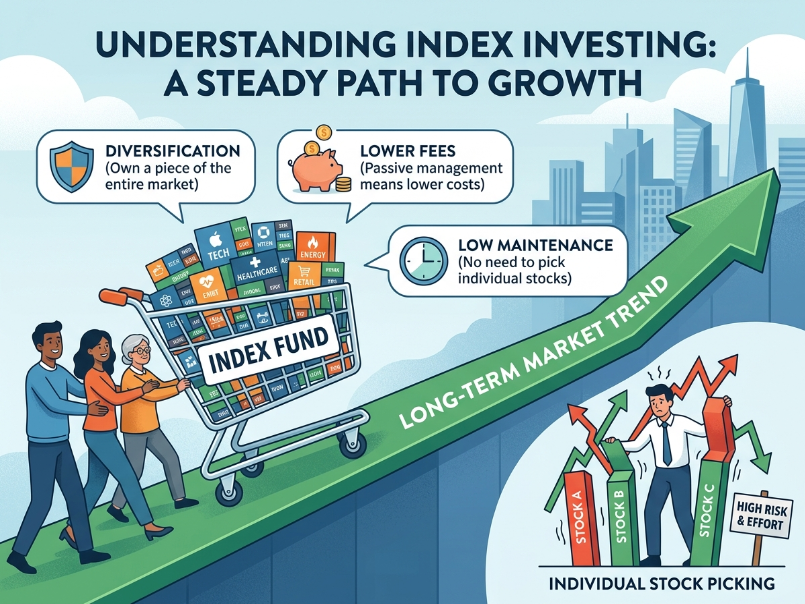
Index Funds
Index funds track market indexes like the S&P 500.
They offer:
- Low fees
- Diversification
- Strong long-term performance
Real Estate
Real estate can provide:
- Rental income
- Appreciation
- Portfolio diversification
Step 6: Understand Retirement Planning
Retirement planning is essential because relying solely on pensions or government support is risky.
The earlier you start, the easier retirement becomes.
Retirement Accounts
Depending on your country, retirement accounts may include:
- 401(k)
- IRA
- Roth IRA
- Pension plans
- Provident funds
These accounts often provide tax advantages.
Retirement Goal Example
If you need $50,000 annually in retirement:
A common guideline suggests saving roughly 25 times annual expenses.
That means:
- Target retirement savings: $1.25 million
This number sounds large, but long-term investing makes it achievable.
Step 7: Protect Yourself With Insurance
Insurance protects your finances from catastrophic losses.
Important types include:
- Health insurance
- Life insurance
- Disability insurance
- Auto insurance
- Home insurance
Without insurance, one major emergency can erase years of savings.
Life Insurance Basics
Term life insurance is often affordable and suitable for families.
It provides financial support if the insured person dies during the policy term.
Step 8: Improve Your Financial Mindset
Money habits are deeply emotional.
Many financial problems are behavioral rather than mathematical.
Common issues include:
- Impulse spending
- Lifestyle inflation
- Fear of investing
- Comparing yourself to others
Build Better Money Habits
Helpful habits include:
- Automating savings
- Avoiding emotional purchases
- Reviewing finances monthly
- Setting financial goals
- Reading financial books regularly
Consistency matters more than intensity.
Common Personal Finance Mistakes
Living Beyond Your Means
Spending more than you earn creates long-term instability.
Ignoring Retirement Savings
Waiting too long dramatically increases how much you must save later.
Carrying Credit Card Debt
High-interest debt can trap people financially for years.
Not Having Insurance
Unexpected events can become financially devastating.
Trying to Get Rich Quickly
Most wealth is built slowly.
Quick-money schemes often create losses instead.
Best Personal Finance Books for Beginners
Helpful books include:
- Rich Dad Poor Dad
- The Psychology of Money
- The Millionaire Next Door
- Your Money or Your Life
- I Will Teach You to Be Rich
Reading about money regularly improves financial awareness.
Final Thoughts
Personal finance is not about perfection.
It is about making slightly better decisions repeatedly over time.
Small improvements compound.
Saving consistently, investing regularly, avoiding destructive debt, and maintaining financial discipline can completely transform your future.
Financial freedom rarely happens overnight. It is usually the result of years of steady habits.
The earlier you begin, the easier the journey becomes.










Leave a Reply