


Wealth Building |
Once you’ve got budgeting down and started a SIP, the next question many beginners ask is: “What else is out there?”
The answer: quite a lot. From cryptocurrency to real estate to running your own business, there are many paths to building wealth. But each comes with its own risks, rewards, and learning curves. This guide gives you an honest, plain-English overview — so you can decide what makes sense for your life.
Cryptocurrency: Exciting, Volatile, and Misunderstood
What Is It?
Cryptocurrency is digital money that runs on a technology called blockchain — essentially a decentralized ledger that records transactions without a central authority like a bank.
Bitcoin was the first (launched in 2009), followed by thousands of others — Ethereum, Solana, XRP, and so on.
Why People Invest in Crypto
- High potential returns — Bitcoin went from under $1 in 2010 to over $100,000 in 2024
- Decentralization — not controlled by any government or central bank
- Growing adoption — more businesses and countries are accepting crypto
The Real Risks (Don’t Skip This)
- Extreme volatility — crypto can drop 50–80% in months, and has done so multiple times
- No intrinsic value guarantee — unlike a company (which has earnings) or real estate (which has rent), crypto’s value is largely driven by sentiment
- Regulatory uncertainty — governments worldwide are still figuring out how to tax and regulate it
- Scams are rampant — the space attracts fraudsters at a higher rate than most asset classes
Beginner’s Approach to Crypto
If you want exposure to crypto, here’s a sensible framework:
- Only invest what you can afford to lose completely — treat it like a high-risk bet, not a core investment
- Limit crypto to 5% or less of your total portfolio until you understand it deeply
- Stick to established coins — Bitcoin and Ethereum have the longest track records
- Use regulated Indian exchanges — CoinDCX, WazirX, or Coinswitch are SEBI-registered options
- Never leave large amounts on an exchange — use a hardware wallet for security
Bottom line on crypto: It can be a small, speculative slice of a diversified portfolio. It should never be the foundation of one.
Real Estate: The Wealth-Builder Most Indians Know (and Some Misunderstand)
Why Real Estate Has Built So Much Wealth
For decades, real estate has been the go-to wealth builder in India — and for good reason:
- Tangible asset — you can see, touch, and use it
- Dual income — appreciation in value plus rental income
- Leverage — you can own a ₹50 lakh property with ₹10 lakh down and a home loan
- Inflation hedge — property values and rents tend to rise with inflation
The Hidden Costs People Forget
Real estate sounds simple but comes with significant costs that beginners often underestimate:
| Cost | Approximate Range |
|---|---|
| Registration & stamp duty | 5–8% of property value |
| Brokerage | 1–2% |
| Maintenance (annual) | 1–2% of property value |
| Property tax | Varies by location |
| Renovation/repairs | Unpredictable |
| Loan interest | 2–3× the principal over 20 years |
Smarter Ways for Beginners to Get Real Estate Exposure
If buying property isn’t within reach right now, consider:
- REITs (Real Estate Investment Trusts) — publicly listed companies that own income-generating properties. You can invest from ₹10,000–₹15,000 and earn dividend-like payouts. Think of it as owning a tiny slice of a mall or office building.
- Real Estate Mutual Funds — funds that invest in real estate companies and REITs
These give you real estate exposure without a 20-year EMI commitment.
When Does Buying Property Make Sense?
- You’re planning to live there for 7+ years (shorter = rarely worth it over renting)
- The EMI is comfortably under 30–35% of your monthly income
- You’ve already built an emergency fund and have some financial cushion
- The property is in a location with genuine demand (not a remote plot sold as “investment”)
Business & Entrepreneurship: The Highest Risk, Highest Reward Path
Why Starting a Business Can Be the Best Investment
When a business succeeds, the returns can be life-changing — no mutual fund or property will ever match the upside of a successful company you built. Additionally:
- You control your own income ceiling
- Your skills and hard work directly translate to wealth
- You can build something with lasting value
The Hard Truth
Most small businesses fail within 5 years. This isn’t to discourage you — it’s to make sure you go in with eyes open and a plan.
Key financial principles for aspiring entrepreneurs:
- Don’t quit your job prematurely — build to ₹1–2 lakh/month in business revenue before leaving a stable salary
- Separate business and personal finances — open a dedicated business account from day one
- Understand your unit economics — does each sale make you money after all costs?
- Keep a 6-month personal runway — if the business hits a rough patch, your personal finances should be able to weather it
- Reinvest profits wisely — growth requires capital, but undisciplined spending kills businesses faster than poor sales
Low-Risk Ways to Start
You don’t have to go all-in immediately. Consider:
- Freelancing in your area of expertise (writing, design, coding, consulting)
- A side hustle that generates income before you scale it
- Small online businesses — print-on-demand, dropshipping, digital products
Putting It All Together: A Wealth-Building Hierarchy
Here’s a suggested order for a beginner building toward long-term wealth:
- ✅ Emergency fund (3–6 months of expenses)
- ✅ Debt repayment (clear high-interest debt like credit cards)
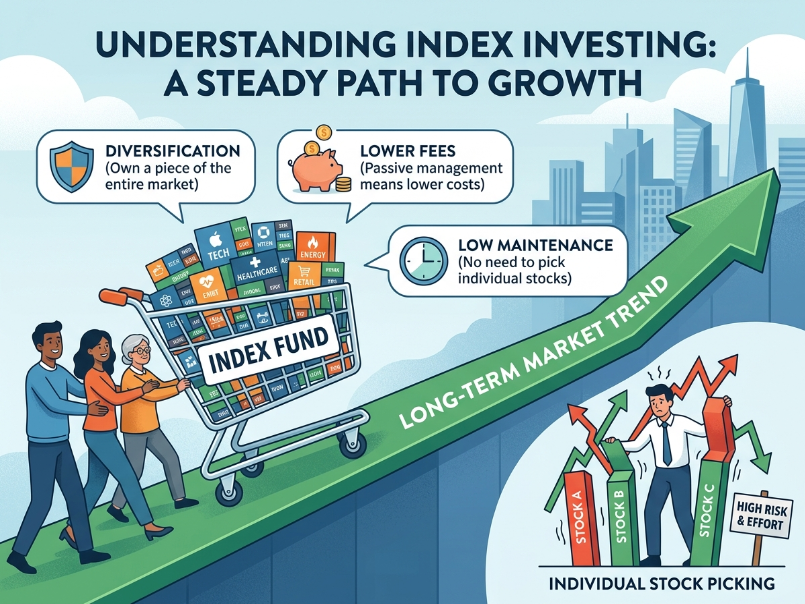
- ✅ SIP in index funds (automated, consistent, low-cost)
- ✅ Term life insurance & health insurance (protect what you’re building)
- ⬆️ Real estate or REITs (when financially stable)
- ⬆️ Business or side income (when you have skills and some capital)
- ⬆️ Crypto (small allocation, only after everything above is in place)
The Wealth Mindset: What Actually Separates the Wealthy
After all the asset classes and strategies, here’s what it really comes down to:
- Consistency beats intensity. A ₹5,000 SIP every month for 20 years beats a ₹1 lakh lump sum once.
- Knowledge compounds too. Every book, article, and course you consume makes your future decisions smarter.
- Wealth is built slowly, then suddenly. The first 10 years feel slow. The last 10 feel explosive.
- Protect the downside. Insurance, diversification, and avoiding bad debt prevent one mistake from wiping out years of progress.
Final Thoughts
There is no single “best” way to build wealth. The best strategy is the one you actually understand, stick to, and build on consistently over time.
Start with the basics. Get comfortable. Then expand.
Your financial future is built one smart decision at a time — and reading articles like this one is already a smart decision.
This article is for educational purposes only and does not constitute financial advice. Please consult a -registered financial advisor before making investment decision.










Leave a Reply