


Money is rarely just about spreadsheets, formulas, or market data. It is deeply emotional, shaped by personal experiences, fears, ambitions, and stories we tell ourselves. Morgan Housel’s bestselling book The Psychology of Money masterfully explains why highly intelligent people often make irrational financial decisions — and why behavior matters more than intelligence in building wealth.
In 2026, with AI-driven market hype, shifting interest rates, geopolitical tensions, and S&P 500 valuations near all-time highs, these lessons are more critical than ever. Whether you are a young professional in London saving for a home, a tech executive in Silicon Valley managing stock options, or an investor in Singapore balancing global portfolios, understanding human psychology can separate good outcomes from devastating ones.
This guide distills 8 of the most timeless and impactful lessons from the book, expanded with 2026 global context, real-world examples, behavioral studies, and actionable strategies you can implement today.
Lesson 1: No One’s Crazy
Financial decisions that seem irrational to you often make perfect sense to the person making them. Our money beliefs are formed by the unique economic era we grew up in, family stories, and personal traumas.
A person who witnessed the 2008 Global Financial Crisis might hoard cash and avoid stocks aggressively, even during the strong 2023–2025 bull market. Meanwhile, someone who started investing in the 2020s tech boom may take big risks in AI stocks, viewing volatility as normal.
2026 Global Context: With inflation stabilizing around 2.5–3.5% in developed markets and higher in some emerging economies, generational gaps are widening. Baby boomers who lived through 1970s stagflation prioritize safety, while millennials and Gen Z, scarred by student debt and pandemic disruptions, chase high-growth opportunities like cryptocurrency or private equity.
Real Stories:
- A European investor who lost heavily in the dot-com bust still avoids tech-heavy portfolios in 2026, missing out on AI gains.
- Studies from behavioral economists like Daniel Kahneman show that personal history creates “experience bias,” influencing risk tolerance more than objective data.
Takeaways for You: Respect different viewpoints instead of judging. Audit your own money story: What economic events shaped your beliefs? Journal them and challenge outdated assumptions. This awareness prevents emotional overreactions during market swings.
Lesson 2: Luck vs Skill
Success in investing often blends luck and skill, but we tend to over-attribute outcomes to skill — especially our own.
Warren Buffett’s extraordinary results came from genuine skill (buying quality businesses) combined with luck (living in a high-growth century for American capitalism). Many “genius” hedge fund managers of the 2010s looked brilliant until market regimes changed.
2026 Perspective: AI stocks and tech valuations in 2025–2026 have created new “winners” whose success may partly stem from timing rather than pure foresight. The same applies to Bitcoin holders from 2017. Markets reward survivors, making it hard to distinguish skill from luck in real time.
Key Insight: Focus on process over outcomes. A good decision can have a bad short-term result, and vice versa. In 2026, with increased market concentration in a few mega-cap stocks, humility is essential.
Actionable Advice: Track your investment decisions in a journal with rationale at the time of purchase. Review annually without hindsight bias. Build portfolios that succeed through broad diversification rather than relying on picking the next “10-bagger.”
Lesson 3: Never Enough
Greed has destroyed more wealth than almost any other force. The goalposts of “success” keep moving — there is always a bigger house, faster car, or higher net worth number.
Many billionaires still feel poor compared to peers. This endless chase leads to excessive risk-taking, ruined relationships, and unhappiness.
Global 2026 Examples: High-net-worth individuals in New York or Dubai pushing for one more big trade, only to lose it in a correction. Stories of lottery winners or crypto millionaires who lost everything because “more” was never enough.
Powerful Quote from Housel: “The hardest financial skill is getting the goalpost to stop moving.”
Practical Steps: Define your “enough” number early — the savings level that delivers true freedom (e.g., $2–3 million for many families in high-cost cities). Once reached, shift focus from accumulation to preservation and enjoyment. Review this annually during portfolio check-ins.
Lesson 4: Confounding Compounding
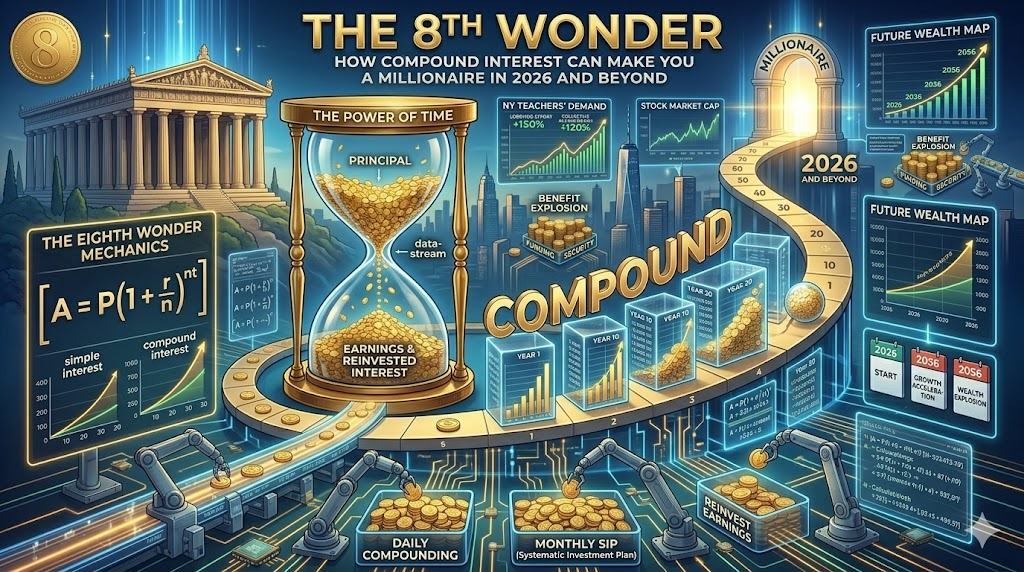
Compounding is the most powerful force in finance, yet it feels slow and boring in the beginning. Time, not intelligence, is the greatest edge.
Deep Math in 2026 Context: Investing $500 monthly at 8% annual return (achievable via global index funds tracking MSCI World or S&P 500):
- After 40 years: Over $1.5 million (with only $240,000 contributed). The majority comes from compounding in later years. Starting 10 years later dramatically reduces the outcome.
Global Relevance: Even in low-interest-rate environments or with moderate market returns projected for the next decade, compounding wins. Warren Buffett’s wealth is largely the result of 60+ years of this effect.
Implementation: Automate investments. Avoid interrupting the process during downturns. Use tax-advantaged accounts (401(k), IRA, ISA) to maximize the snowball.
Lesson 5: Getting Wealthy vs Staying Wealthy
Building wealth requires risk, optimism, and aggression. Preserving it demands humility, paranoia, and conservatism. Most people fail at the second part.
2026 Application: Tech entrepreneurs who built fortunes in the 2020s boom are now learning to shift to defensive strategies — more bonds, diversified global assets, and insurance products — as valuations reset.
Strategies:
- Build a “sleep-well-at-night” portfolio.
- Maintain cash reserves for opportunities.
- Diversify across geographies (US, Europe, Asia, emerging markets). Studies show that surviving major drawdowns (like 50%+ crashes) matters more than capturing every upside.
Lesson 6: Tails Drive Outcomes
Extreme events (black swans or “tails”) dominate long-term results more than average days. Most returns come from a small number of exceptional periods.
2026 Insight: The 2020 pandemic crash and recovery, or the 2022 inflation shock, created massive wealth shifts. Investors who stayed invested through tails captured the rebound.
Advice: Avoid over-optimizing for normal times. Prepare for extremes with proper asset allocation and emotional rules (e.g., never sell more than 10% during panic).
Lesson 7: Freedom Is the Ultimate Dividend
The highest return on money is the control over your time. Wealth’s real value is independence — choosing how you spend your days.
Many high earners are “rich” on paper but trapped by golden handcuffs. In 2026, with remote work and digital nomad trends, more people are prioritizing time freedom over status symbols.
Global Stories: Professionals in Europe taking sabbaticals after reaching financial milestones versus those stuck in high-stress jobs despite large salaries.
Action: Calculate your “freedom number” — savings that cover basic expenses without working. Aim for it as your primary goal.
Lesson 8: Humility and Optimism Are Essential Partners
Pessimism sounds intelligent but optimism drives progress. The best investors combine intellectual humility with long-term optimism about human ingenuity and markets.
2026 Outlook: Despite concerns around debt, AI disruption, and geopolitics, markets have historically rewarded patient optimists. Balance this with humility — admit what you don’t know and diversify accordingly.
Final Integration: These 8 lessons form a behavioral framework stronger than any stock-picking system.
Applying These Lessons in 2026
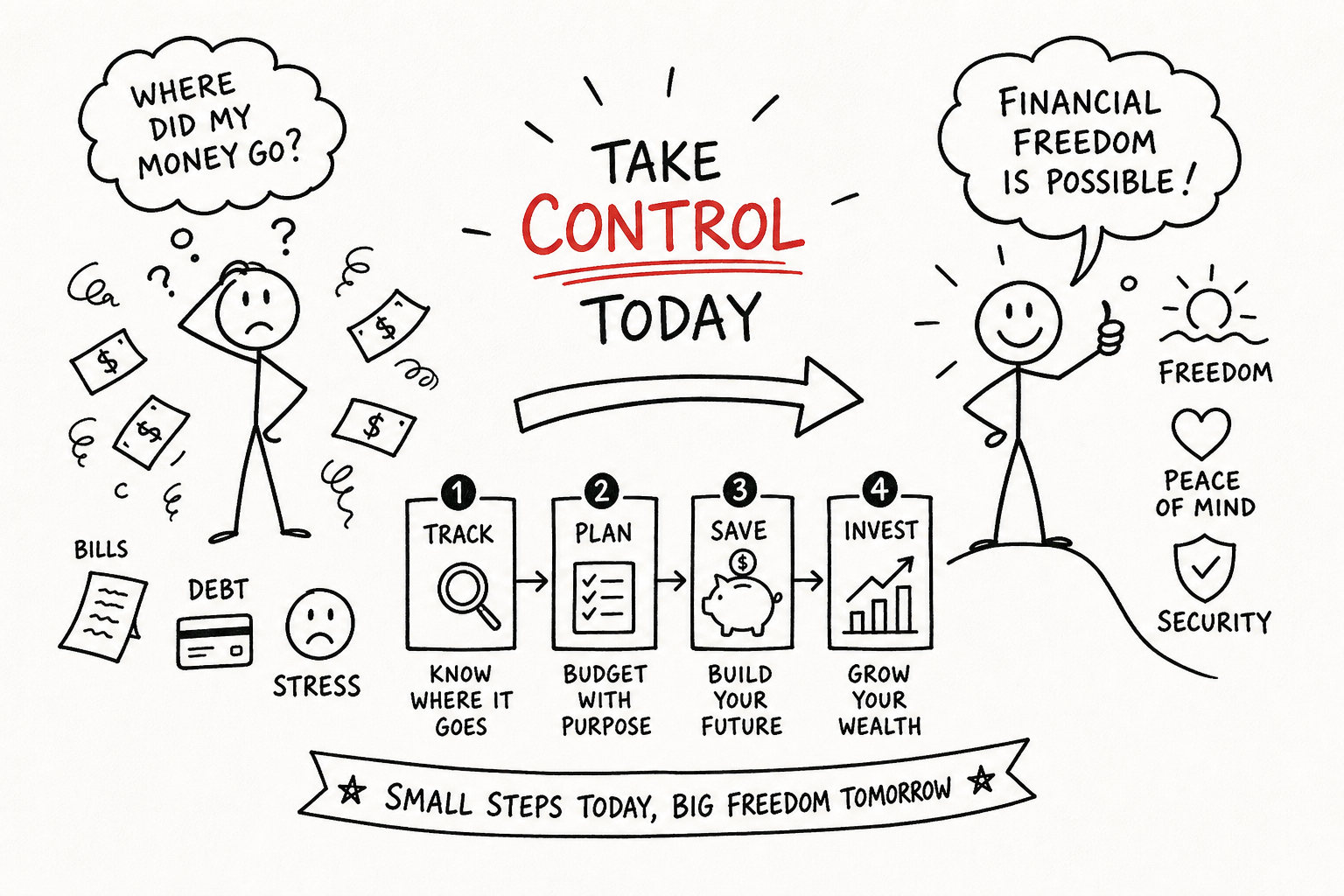
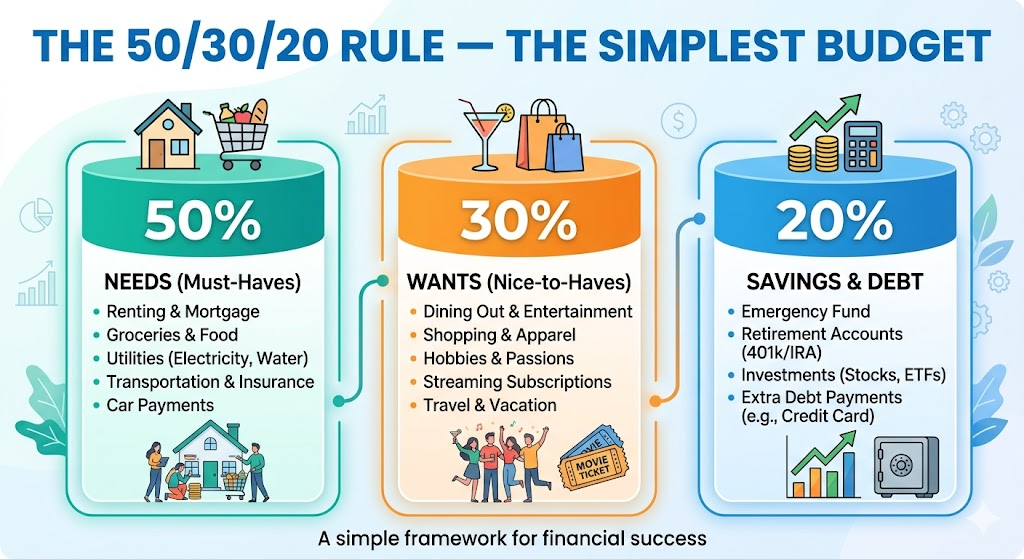
- Prioritize savings rate over chasing high returns.
- Build humility especially during bull markets.
- Focus on controllable factors — behavior, consistency, and time in the market.
- Adapt to current realities: higher volatility from AI and policy changes, but strong long-term growth potential in technology and productivity.
Actionable Framework for Readers
- Money Beliefs Journal — Write your core money stories and review quarterly.
- Annual “Enough” Review — Adjust your financial goals with life changes.
- Rules-Based Portfolio — Create written investment rules (e.g., “Never sell during a 20% drop”) aligned with your psychology.
- Monthly Reflection — Track decisions against these 8 lessons.
- Community Learning — Discuss with like-minded investors on FinanceQuiver forums or comments.
Conclusion
The Psychology of Money teaches that financial success is less about what you know and more about how you behave. In 2026 and beyond, mastering these timeless lessons will help you build not just wealth, but peace of mind and true freedom.
The markets will always be volatile and unpredictable. Your behavior is the one variable you can control. Start applying these principles today — your future self will thank you.
CTA: Which of these 8 lessons resonates with you the most? Share in the comments below. Subscribe to the FinanceQuiver newsletter for the full behavioral finance series, monthly market insights, and compounding calculators. Share this article with a friend or family member who needs these lessons in 2026.
Related articles on FinanceQuiver: The 8th Wonder of Compound Interest | Warren Buffett’s Value Investing Strategy | 10 Behavioral Finance Traps to Avoid.







Leave a Reply