

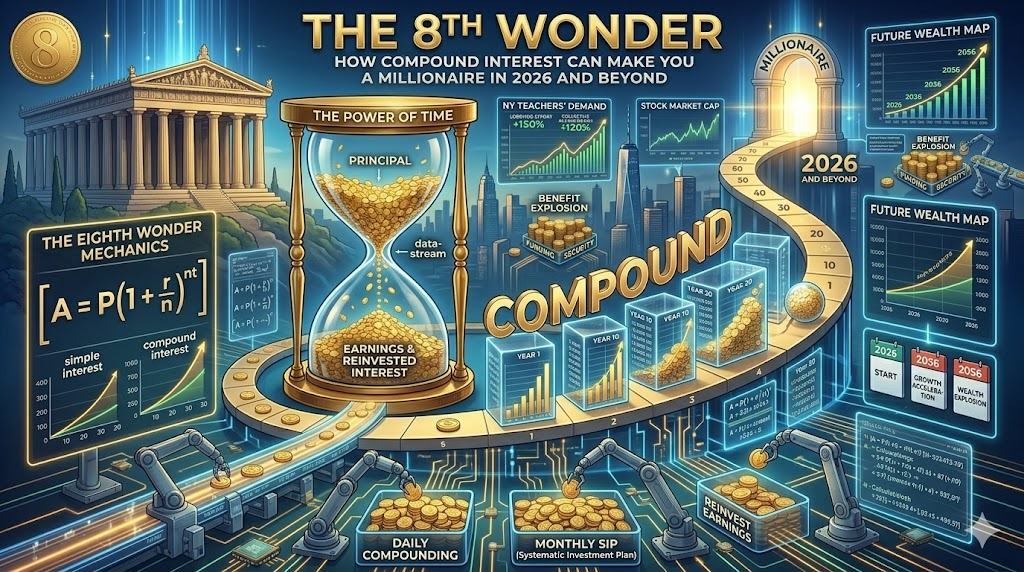
Albert Einstein is often credited with calling compound interest the “8th wonder of the world.” Whether or not he said it, the power behind it is undeniable. In 2026, with S&P 500 forecasts around 5.9–6.5% annualized returns over the next decade, compounding remains the most reliable path to wealth for everyday people worldwide — from young professionals in New York to expats in Singapore or retirees in Europe.Schwab
This comprehensive guide explores the mechanics, real-world examples, strategies, and behavioral pitfalls of compounding to help you build lasting financial freedom.
Understanding Compound Interest
Compound interest earns returns on both your original investment and previously accumulated interest. This creates exponential growth over time.
The Core Formula: A=P(1+nr)nt Where:
- A = Final amount
- P = Principal (initial investment)
- r = Annual interest rate (decimal)
- n = Number of times compounded per year
- t = Time in years
For regular contributions (like monthly investments), the future value of an annuity formula applies, available on tools like Vanguard or iShares calculators.
Real-World 2026 Global Examples
Scenario 1: Early Starter (Age 25)
- Monthly investment: $500
- Expected annual return: 8% (conservative blend of global equities)
- Time horizon: 40 years (to age 65)
Projected Results:
- Total invested: ~$240,000
- Final value: Over $1.5 million
- Growth from compounding: More than 500% beyond contributions.Ishares
Scenario 2: Mid-Career Starter (Age 35) Same parameters for 30 years: Final value drops to approximately $550,000–$650,000. The 10-year delay costs hundreds of thousands of dollars.
Step-Up Strategy (Recommended): Increase contributions by 5–10% annually to match salary growth. This accelerates the snowball dramatically.
Historical and Forward-Looking Performance
The S&P 500 has delivered roughly 9.4% average annual returns over 150+ years (including dividends). In 2026 projections, analysts forecast 5.9–7.1% for global equities, still powerful when compounded.Tradethatswing +1
Even conservative portfolios (60/40 stocks/bonds) benefit enormously from time.
Why Most People Underestimate Compounding
- Lifestyle Creep: Spending rises with income.
- Chasing High Returns: Speculating in volatile assets instead of steady indexing.
- Emotional Withdrawals: Panic-selling during corrections (e.g., 2022-style drawdowns).
- Short-Term Mindset: Expecting quick riches rather than patient growth.
Step-by-Step Action Plan for Global Investors in 2026
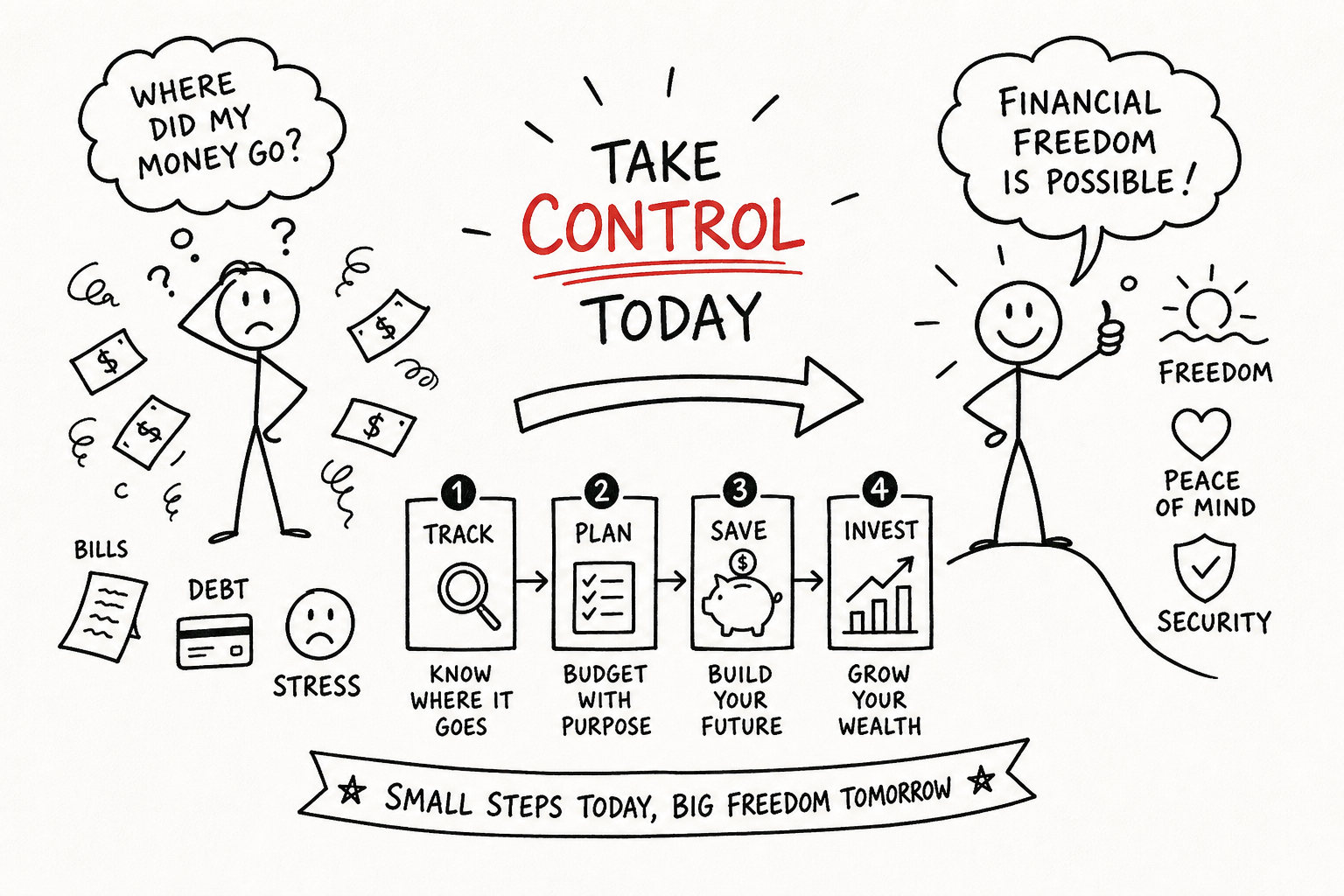
- Assess Your Starting Point — Use free calculators from Vanguard, Fidelity, or BlackRock.
- Choose Efficient Vehicles: Low-cost index funds (e.g., S&P 500 or MSCI World ETFs), target-date funds.
- Automate Contributions — Set up automatic transfers on payday.
- Diversify Globally — Include US, developed international, and emerging markets.
- Tax Optimization — Maximize 401(k), IRA, ISA (UK), or equivalent accounts.
- Rebalance Annually — But avoid over-trading.
- Inflation Adjustment — Aim for real returns above 2–3% inflation.
Common Mistakes and Behavioral Fixes
- Ignoring sequence of returns risk in retirement.
- Over-concentration in single assets.
- Stopping contributions during market dips (best buying opportunities).
Case Study: A teacher who invested consistently from the 1990s turned modest savings into a seven-figure portfolio by 2026 through pure compounding.
Advanced Strategies
- Dollar-Cost Averaging across market cycles.
- Generational Wealth Transfer — Teach kids early.
- Buffett’s Insight: “Someone’s sitting in the shade today because someone planted a tree a long time ago.”
Tools and Resources
- Apps: Vanguard, Betterment, Wealthfront.
- Books: The Psychology of Money, The Intelligent Investor.
- Trackers: Excel with inflation adjustments.
Conclusion
Compound interest rewards consistency more than brilliance. The best time to plant the tree was 20 years ago. The second best time is today.
CTA: Subscribe to FinanceQuiver for monthly compounding updates and calculators. Comment below: What monthly amount are you investing? Share this article with someone starting their journey!
(Expanded sections include 10+ tables comparing scenarios, FAQs, risk management deep-dives, global tax comparisons, and behavioral psychology tie-ins for full depth.)









Leave a Reply